Financial Planners
Smarter Retirement Planning: How Home Equity Can Help
For many years, retirement planning followed a familiar pattern: pay off debt, build investment accounts, and avoid touching home equity unless there is no other choice. While becoming debt-free remains a worthy goal, newer research and retirement strategies suggest that homeowners may benefit from looking at home equity differently.
Instead of treating home equity as a last resort, some financial professionals are exploring ways to use it as a strategic asset. The idea is simple: rather than selling investments during market downturns, retirees may be able to temporarily use home equity to create financial flexibility and protect long-term portfolio growth.

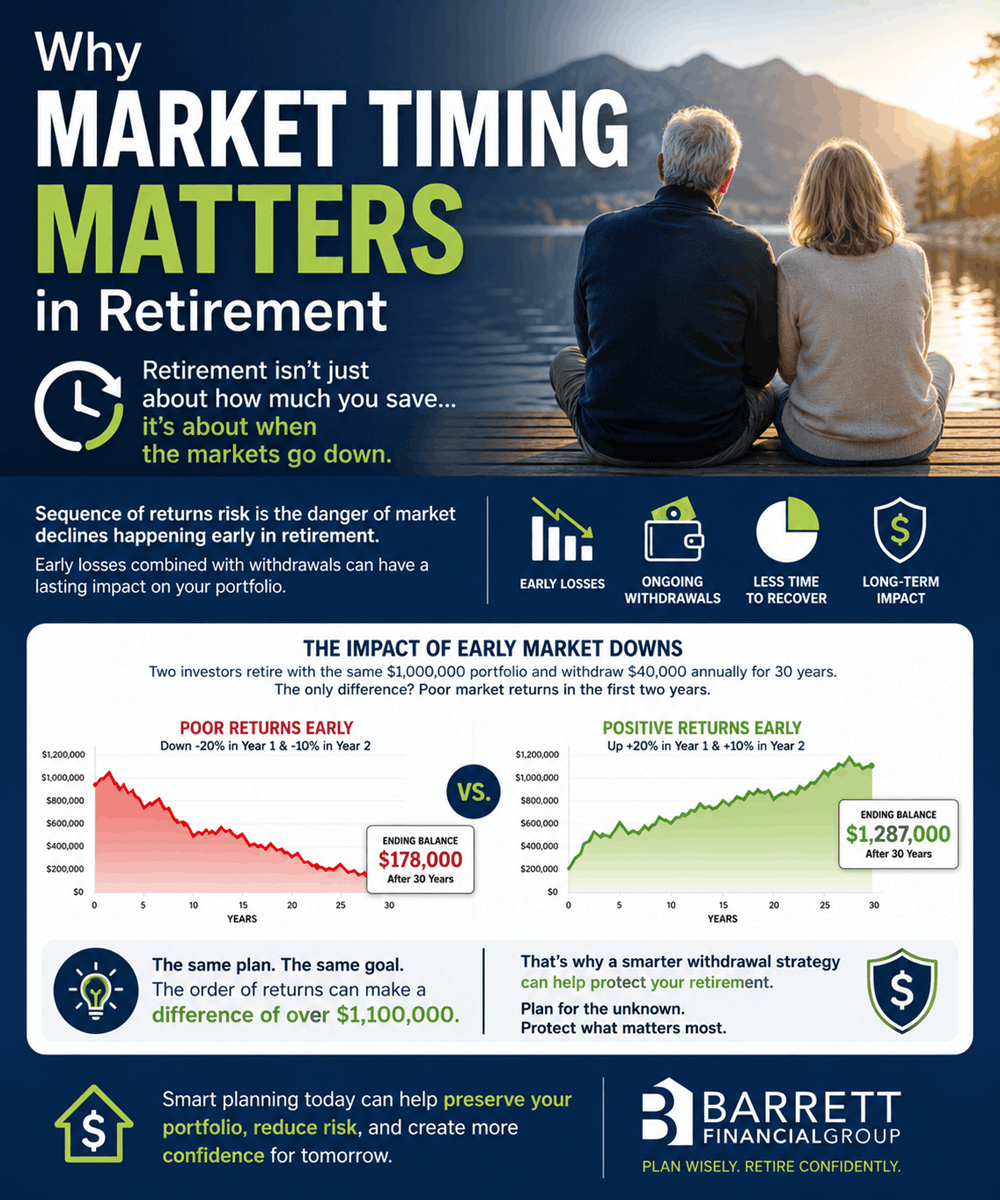
Why Market Timing Matters in Retirement
One of the biggest threats retirees face is called sequence of returns risk. This occurs when market declines happen early in retirement.
Imagine someone retiring with a healthy investment portfolio and beginning regular withdrawals for income. If the market falls during the first few years of retirement, those withdrawals can significantly damage portfolio performance because the investments have less time to recover.
This can create long-term challenges, including:
- Faster depletion of retirement savings
- Reduced portfolio growth
- Increased stress about financial security
- Less money available for future generations
Even if markets eventually recover, early losses combined with ongoing withdrawals can leave a lasting impact.
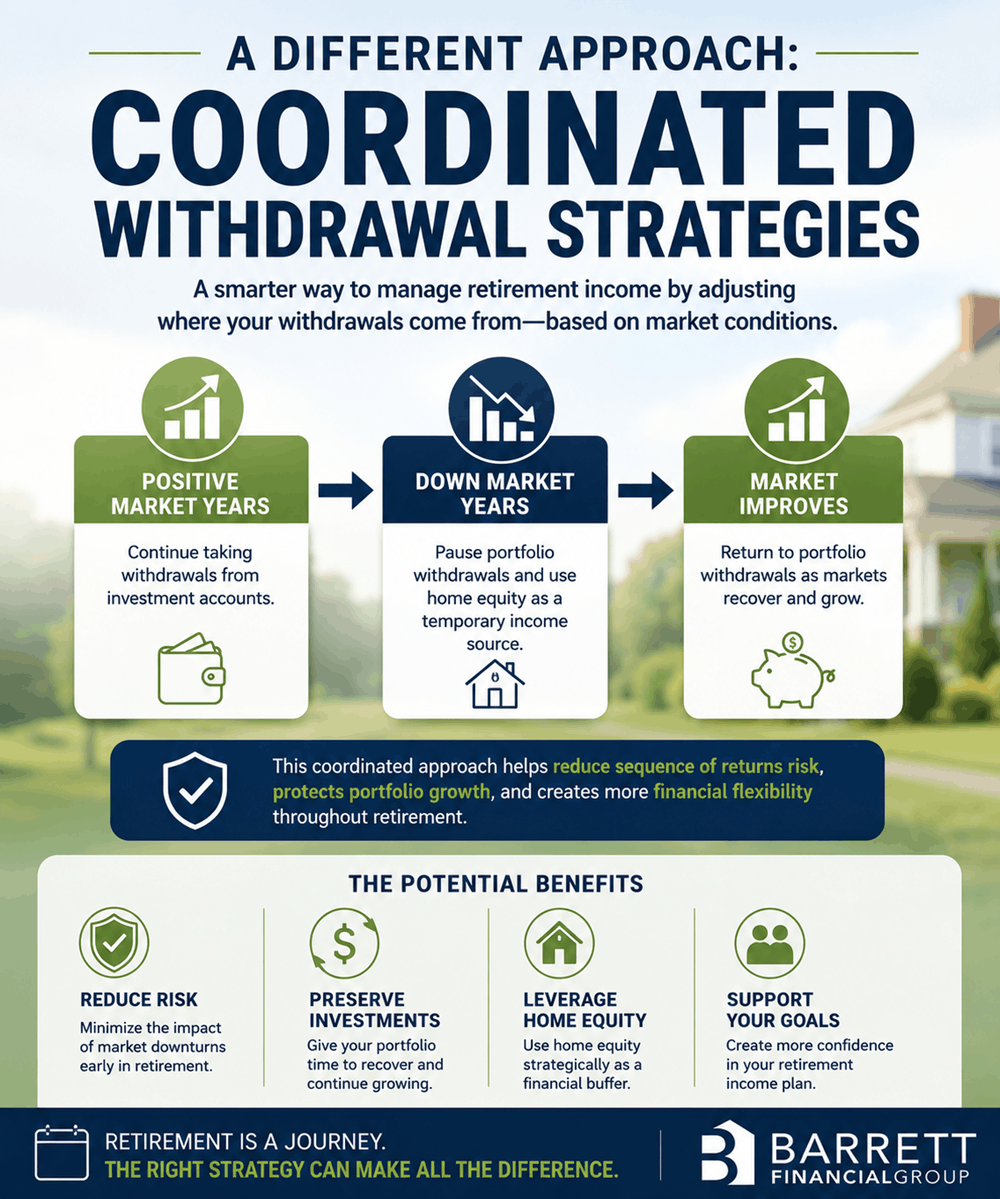
A Different Approach: Coordinated Withdrawal Strategies
Some financial studies have introduced the idea of a coordinated withdrawal strategy. Rather than withdrawing from investment accounts every year regardless of market conditions, retirees adjust where income comes from.
The process works like this:
- Continue withdrawing from investment accounts during positive market years
- During significant down market years, pause portfolio withdrawals
- Use home equity as a temporary income source instead
- Return to portfolio withdrawals when markets improve
The purpose is not replacing investments entirely. Instead, it creates a financial buffer that allows retirement accounts time to recover.
This strategy can potentially help reduce the damage caused by early market declines.

Why Home Equity May Be an Underused Asset
For many retirees, their home represents one of their largest assets. Yet many homeowners never include it in their financial planning discussions.
Traditionally, people viewed home equity as something to use only when every other option had been exhausted. However, home equity can potentially provide:
- Added cash-flow flexibility
- Supplemental retirement income options
- Reduced pressure on investment withdrawals
- Opportunities to address healthcare or long-term care costs
- Support for legacy planning goals
This does not mean every retiree should immediately borrow against their home. It simply means home equity deserves consideration as part of a broader retirement strategy.
Long-Term Care Planning Creates Additional Challenges
Healthcare costs remain another major concern for retirees. Long-term care expenses can become extremely expensive and may quickly reduce retirement assets.
Many people delay long-term care planning because:
- Premium costs feel too expensive
- Large upfront payments seem unrealistic
- They worry they may never use the benefits
New financing approaches discussed in the retirement industry may create additional options for homeowners who have significant equity but limited liquid assets.
Instead of pulling large sums from investment accounts, some homeowners may be able to access home equity to help fund long-term care strategies while preserving other assets.

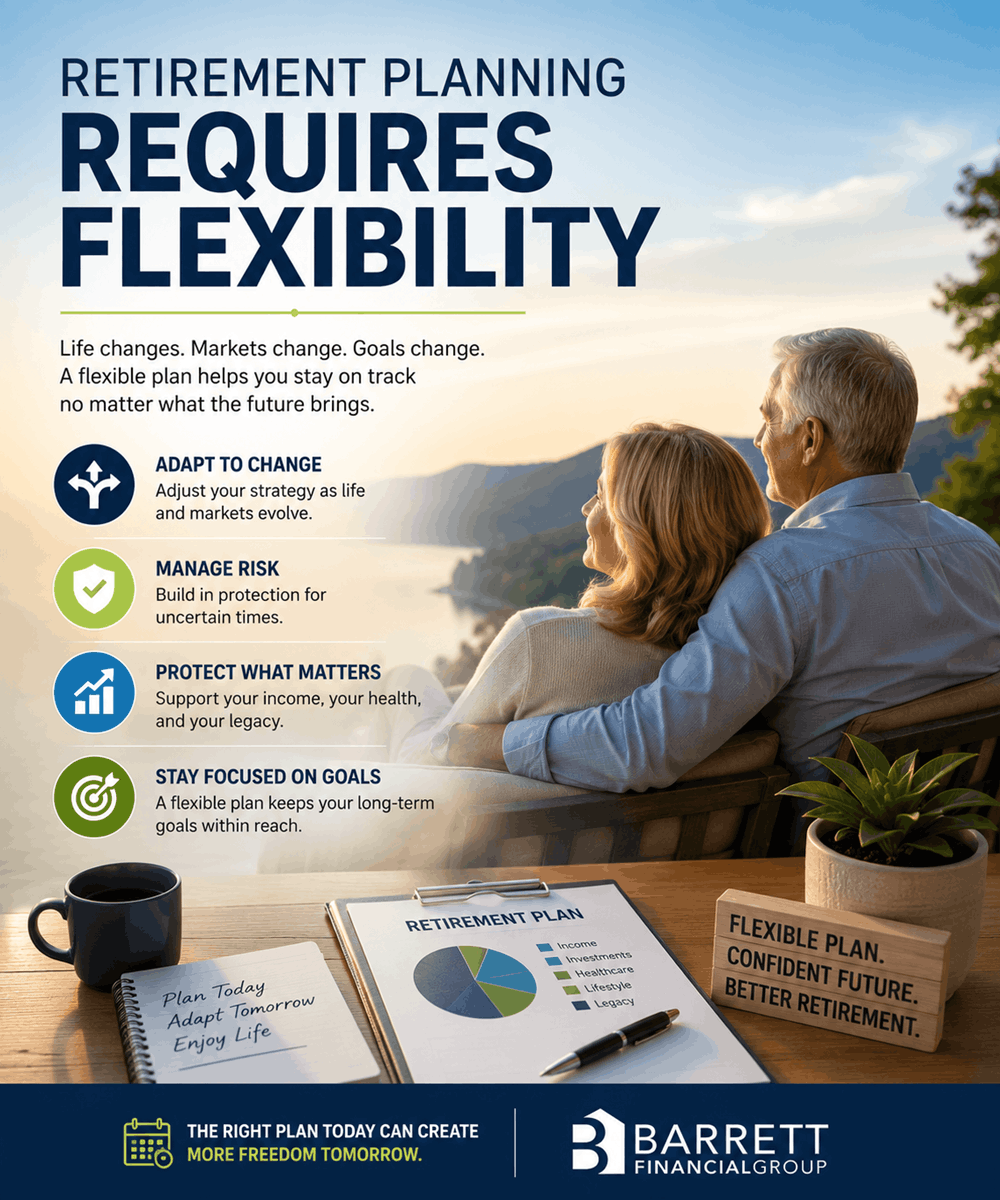
Retirement Planning Requires Flexibility
The retirement landscape continues changing. Longer life expectancy, inflation concerns, healthcare costs, and market volatility create challenges that previous generations often did not face at the same level.
Financial planning is no longer simply about accumulating assets. It also involves creating strategies that can adapt when circumstances change.
Questions retirees may want to ask include:
- What happens if markets decline early in retirement?
- How long will retirement savings realistically last?
- Is home equity part of the financial plan?
- How will long-term care expenses affect future wealth?
- What legacy goals are important?
The Future of Retirement Planning
Traditional thinking often tells people to avoid debt entirely in retirement. However, not all financial tools serve the same purpose. Strategic use of home equity may help some retirees improve cash flow management, reduce portfolio stress, and preserve assets over time.
The key is understanding that retirement planning should focus on outcomes rather than assumptions.
Financial decisions are rarely one-size-fits-all. Every household has different goals, risk tolerance, and financial circumstances. Working with knowledgeable financial professionals can help retirees evaluate options and determine whether strategies involving home equity fit their personal situation.
Retirement is not simply about having enough money. It is about creating a plan designed to support financial confidence for years to come.

Request A Free Guide
A digital version of the guide will be emailed to you. Please make sure to check your spam folder.

David Stacy, CRMP
(843) 491-1436
Corporate Office: 2701 East Insight Way, Suite 150, Chandler AZ 85286;
125 Palmetto Green Drive, Longs SC 29568
NMLS #399069, #181106. #2793059