For many homeowners nearing retirement, reverse mortgage loans can create opportunities to improve cash flow while staying in the home they already love. However, first-time borrowers often feel uncertain because the process sounds complicated. As a result, they delay exploring options that could help support retirement goals. Understanding each step makes the process easier and helps you make informed decisions with confidence.
If you are exploring your options for the first time, South Carolina Reverse Mortgage Services helps borrowers understand the details without pressure. Instead of guessing how the process works, you can learn exactly what to expect before making decisions.
Why Homeowners Consider Reverse Mortgage Loans
Many people reach retirement with significant equity in their homes but limited monthly income. Therefore, they begin looking for solutions that allow them to use that equity differently.
Homeowners often consider this option because it may help:
- Supplement retirement income
- Cover healthcare expenses
- Reduce financial stress
- Create a financial safety net
- Increase cash flow flexibility
Although every financial situation differs, understanding the process early helps borrowers avoid confusion later.
Step 1: Determine Basic Eligibility
Before moving forward, lenders first determine whether you meet standard qualification requirements for reverse mortgage loans.
Typical requirements include:
- Age requirements for eligible borrowers
- Sufficient home equity
- Primary residence status
- Ability to maintain taxes and insurance obligations
- Financial assessment review
Since qualification standards vary, borrowers should gather accurate information before assuming they qualify.
Step 2: Schedule a Reverse Mortgage Consultation
After learning the basics, many homeowners schedule a reverse mortgage consultation to discuss goals and questions.
During this stage, borrowers often ask:
- How much equity may be available?
- What costs should I expect?
- What happens if I move later?
- How does repayment work?
Because every homeowner has different needs, a conversation helps identify whether the program aligns with long-term plans.
Understanding the Reverse Mortgage Process

Reverse mortgage loans Charleston SC
The reverse mortgage process becomes easier when borrowers understand the sequence of events before paperwork begins.
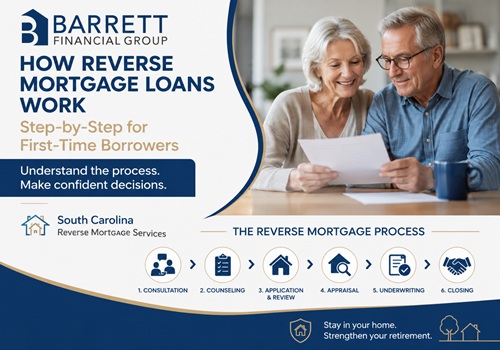
Most first-time borrowers move through these general stages:
- Initial education
- Financial review
- Counseling session
- Application submission
- Home appraisal
- Underwriting review
- Final closing
Consequently, knowing the order of events reduces uncertainty and helps borrowers feel more prepared.
Step 3: Complete Required Counseling
Borrowers usually complete a counseling session before continuing.
This step serves an important purpose because counselors explain:
- Loan responsibilities
- Payment options
- Costs and fees
- Alternative solutions
- Long-term considerations
Rather than pushing a decision, counseling gives homeowners additional information for informed planning.
Step 4: Home Appraisal and Financial Review
Next, the lender gathers information regarding the home’s value and financial qualifications.
The appraisal helps determine:
- Estimated market value
- Property condition
- Eligibility factors
- Available equity calculations
Meanwhile, the financial review evaluates the borrower’s ability to continue meeting property obligations.
At this stage, South Carolina Reverse Mortgage Services works with homeowners to help them understand what documentation may be needed and what to expect during evaluation.
Step 5: Review Options From Reverse Mortgage Lenders
Not every company structures programs exactly the same way. Therefore, comparing reverse mortgage lenders becomes an important step.
Borrowers should examine:
- Available loan options
- Fees and costs
- Customer support
- Experience levels
- Communication style
The lowest cost does not always create the best experience. Instead, clear communication often becomes equally valuable.
What First-Time Borrowers in Charleston SC Should Know
Homeowners in Charleston SC often ask whether location changes how the process works.
The overall steps remain similar; however, local housing values, property types, and market conditions may influence loan calculations. Therefore, speaking with professionals familiar with local markets can provide additional insight.
Common Questions About Reverse Mortgage Loans
First-time borrowers frequently ask similar questions about reverse mortgage loans before moving forward.
Will I lose ownership of my home?
No. Borrowers typically retain ownership as long as they continue meeting loan requirements.
Do I have to move out?
No. The home remains your primary residence.
Can funds be received in different ways?
Yes. Depending on the program, borrowers may have access to options such as:
- Lump sum payments
- Monthly distributions
- Credit line arrangements
- Combination structures
Is the process difficult?
The process usually becomes much easier when borrowers understand each step before beginning.
Understanding reverse mortgage loans step by step helps remove uncertainty for first-time borrowers. Instead of feeling overwhelmed by unfamiliar terms, homeowners can approach the process with greater confidence. While the process involves several stages, preparation and education make each step easier.
If you want guidance tailored to your goals, South Carolina Reverse Mortgage Services can help you understand available options and answer important questions before you move forward.
Ready to learn whether a reverse mortgage could fit your retirement goals? Contact South Carolina Reverse Mortgage Services today and speak with a professional who can explain your options, answer your questions, and help you make informed decisions.
Learn more about reverse mortgages on our Facebook page.
South Carolina Reverse Mortgage Services
Charleston, SC 29401
843-491-1436
www.reversemortgagespecialistusa.com/charleston
Areas Served:
Myrtle Beach, SC, Charleston, SC, Columbia, SC, Greenville, SC, Hilton Head Island, SC