
Understanding Reverse Mortgage Property Requirements is one of the most important steps when exploring a reverse mortgage. While many homeowners focus on age and home equity, the property itself must also meet specific guidelines before a loan can be approved. Whether you are considering a traditional Home Equity Conversion Mortgage (HECM) or a proprietary reverse mortgage product, knowing the requirements can help you determine your eligibility and avoid surprises during the application process.
At Reverse Mortgage Specialists, we help homeowners understand every aspect of the reverse mortgage process, including property eligibility requirements that can affect approval.
Why Reverse Mortgage Property Requirements Matter
A reverse mortgage allows eligible homeowners to convert a portion of their home’s equity into available funds while continuing to live in the property. However, lenders must verify that the home meets program standards designed to protect both the borrower and the lender.
These requirements evaluate factors such as:
- Property type
- Occupancy status
- Home condition
- Existing liens
- Property taxes and insurance
Meeting these standards is essential before a reverse mortgage can move forward.
Eligible Property Types
Several different property types may qualify for a reverse mortgage.
The most common eligible properties include:
- Single-family homes
- FHA-approved condominiums
- Townhomes
- Planned Unit Developments (PUDs)
- Multi-family properties with two to four units when the borrower occupies one unit as a primary residence
- Manufactured homes that meet FHA standards
- Modular homes
- Certain mixed-use properties with primarily residential use
In most cases, vacation homes, second homes, and investment properties do not qualify because reverse mortgages are intended for owner-occupied primary residences.
Primary Residence Requirements
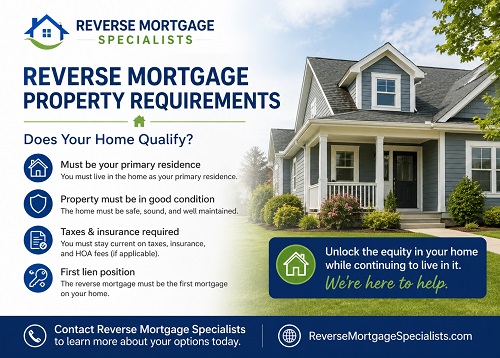
One of the most important Reverse Mortgage Property Requirements involves occupancy. The property must be your primary residence, meaning it is the home where you live most of the year.
Borrowers are generally required to continue living in the property after closing. If the home is no longer considered your primary residence, the reverse mortgage may become due and payable.
For retirees who travel or spend time at multiple residences throughout the year, it is important to discuss occupancy requirements with a qualified advisor before applying.
Reverse Mortgage Property Requirements Property Condition Standards
The condition of the home also plays a significant role in approval.
To qualify, the property should be:
- Structurally sound
- Safe for occupancy
- Properly maintained
- Free from major health or safety hazards
During the appraisal process, the property will be evaluated to ensure it meets applicable guidelines. Issues such as foundation problems, roof damage, electrical concerns, or significant deferred maintenance may need to be addressed before closing.
Existing Mortgage and Lien Requirements
A reverse mortgage must hold first lien position.
If you currently have a traditional mortgage, reverse mortgage proceeds are typically used first to pay off the existing loan balance. Any remaining funds may then be available to you based on the loan program and eligibility factors.
This is one reason many homeowners choose a reverse mortgage—to eliminate an existing mortgage payment while continuing to live in their home.
Property Taxes and Insurance Obligations

Reverse mortgage in Hilton Head Island SC
Even after obtaining a reverse mortgage, homeowners remain responsible for ongoing property expenses.
These obligations include:
- Property taxes
- Homeowners insurance
- Flood insurance when required
- HOA or condominium fees when applicable
Remaining current on these expenses is necessary to keep the loan in good standing.
Expanded Property Options Through Proprietary Programs
Some homeowners own properties that may not fit traditional FHA guidelines. In these situations, proprietary reverse mortgage programs may offer additional flexibility.
Certain jumbo reverse mortgage options may allow:
- Higher-value homes
- Some non-FHA approved condominiums
- Certain properties with solar leases
- Select legal non-conforming properties
These programs can provide additional opportunities for homeowners who may not qualify under standard HECM guidelines.
How Reverse Mortgage Specialists Can Help Understand Reverse Mortgage Property Requirements
Navigating Reverse Mortgage Property Requirements can feel overwhelming, especially when property guidelines vary by loan program. Reverse Mortgage Specialists can review your home’s eligibility, explain available options, and help determine whether a HECM or proprietary reverse mortgage best fits your financial goals.
Our team works closely with homeowners to provide education, guidance, and personalized solutions designed to maximize the benefits of home equity during retirement.
Learn If Your Home Qualifies Today
Every property is unique, and qualification depends on several factors. If you are considering a reverse mortgage, the first step is understanding whether your home meets current eligibility requirements.
Contact Reverse Mortgage Specialists today to discuss your property, review reverse mortgage property requirements and discover how your home equity may help support your retirement plans.
Learn more about reverse mortgages on our Facebook page.
Reverse Mortgage Specialist of Hilton Head
Hilton Head Island, SC 29926
(843) 491-1436
https://reversemortgagespecialistusa.com
Areas Served:
Myrtle Beach, SC, Charleston, SC, Columbia, SC, Greenville, SC, Hilton Head Island, SC