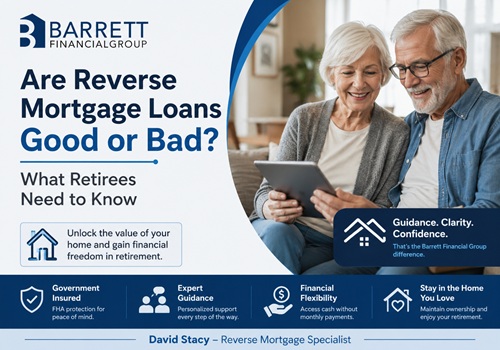
Many homeowners approaching retirement ask the same question: Are reverse mortgage loans good or bad? The answer depends on your financial goals, your retirement plans, and how well you understand the loan. While reverse mortgages have faced criticism over the years, today’s programs include stronger protections and clearer guidelines designed to help qualified homeowners make informed decisions.
At David Stacy Reverse Mortgage Specialist, we often speak with retirees who have heard conflicting information. As a result, many people are unsure whether a reverse mortgage could help them achieve greater financial flexibility during retirement.
Why Reverse Mortgages Have a Mixed Reputation
For decades, reverse mortgages have been surrounded by myths and misunderstandings. In many cases, older loan programs lacked the safeguards that exist today. Consequently, some borrowers entered agreements without fully understanding the long-term responsibilities involved.
Because of these early challenges, many homeowners still wonder whether a reverse mortgage good or bad decision depends entirely on their circumstances. Fortunately, significant improvements have transformed the industry.
Past Challenges That Created Concern
Several factors contributed to the negative perception of reverse mortgages:
- Limited borrower education
- Inconsistent lending standards
- Fewer government protections
- Confusing loan terminology
- Large upfront withdrawals that depleted funds too quickly
However, federal regulations have addressed many of these issues over the years.
How Reverse Mortgage Loans Work Today
Modern reverse mortgages operate under strict guidelines designed to protect borrowers. Unlike traditional mortgages, qualified homeowners can convert a portion of their home equity into accessible funds without making required monthly mortgage payments, provided they continue meeting loan obligations.
These obligations include:
- Living in the home as a primary residence
- Paying property taxes
- Maintaining homeowners insurance
- Keeping the home in good condition
- Paying any applicable HOA fees
Additionally, the loan generally becomes due when the borrower permanently leaves the home, sells the property, or passes away.
Consumer Protections That Benefit Borrowers
One reason reverse mortgages have become safer is the addition of mandatory borrower safeguards.
Before completing a reverse mortgage loan application, borrowers must participate in independent counseling with a HUD-approved counselor. This requirement helps homeowners understand the loan structure, repayment terms, costs, and responsibilities before moving forward.
Additional protections include:
- Financial assessments to evaluate borrower readiness
- Limits on first-year withdrawals
- FHA insurance protections for HECM loans
- Non-recourse provisions that protect heirs from owing more than the home’s value
These safeguards help borrowers make educated decisions rather than relying on assumptions or outdated information.
When Reverse Mortgage Loans Can Be a Smart Retirement Tool
For many retirees, home equity represents their largest financial asset. Therefore, accessing that equity strategically can create additional financial breathing room.
A reverse mortgage may be beneficial if you:
- Need supplemental retirement income
- Want to remain in your home long term
- Have substantial home equity
- Want flexibility in accessing funds
- Prefer not to take on a new monthly mortgage payment
In the middle of evaluating your options, David Stacy Reverse Mortgage Specialist can help explain how these loans work and whether they align with your retirement goals.
Understanding the Costs Before You Decide
Every financial product has costs, and reverse mortgages are no exception. Therefore, it is important to review all fees carefully before making a decision.
Potential costs may include:
- Origination fees
- Closing costs
- Mortgage insurance premiums
- Interest charges
- Servicing fees in certain situations
A qualified reverse mortgage lender should clearly explain every fee so there are no surprises later.
Common Ways Homeowners Use Reverse Mortgage Loans

Reverse mortgage loans Myrtle Beach SC
Borrowers use reverse mortgage proceeds in many different ways depending on their retirement needs.
Common uses include:
- Covering healthcare expenses
- Paying for home renovations
- Managing unexpected financial emergencies
- Supplementing retirement income
- Eliminating existing mortgage payments
- Funding travel and lifestyle goals
Because every retirement situation is unique, the best use of funds varies from one homeowner to another.
The Importance of a Reverse Mortgage Consultation
Before making any major financial decision, gathering accurate information is essential. A professional reverse mortgage consultation provides an opportunity to review your goals, assess eligibility, and compare alternatives.
During a consultation, homeowners can learn:
- Available loan options
- Estimated borrowing amounts
- Long-term financial implications
- Potential benefits and drawbacks
- Alternative financing solutions
As a result, borrowers gain greater confidence in their decision-making process.
When Reverse Mortgage Loans May Not Be the Right Choice
Although reverse mortgages offer advantages for many retirees, they are not ideal for everyone.
You may want to explore other options if you:
- Plan to move within a few years
- Want to preserve maximum home equity for heirs
- Have sufficient retirement income already
- Qualify for lower-cost borrowing alternatives
Therefore, evaluating your long-term plans remains one of the most important parts of the decision.
Are Reverse Mortgage Loans Good or Bad?
The reality is that reverse mortgage loans are neither inherently good nor bad. Instead, they are financial tools designed for specific situations. For some retirees, they provide valuable access to home equity and improve retirement cash flow. For others, alternative solutions may better fit their goals.
The key is understanding how the loan works, the costs involved, and your ongoing responsibilities as a borrower. When used appropriately, a reverse mortgage can help support financial stability and independence throughout retirement.
Before making a decision, speak with David Stacy Reverse Mortgage Specialist to receive personalized guidance and determine whether a reverse mortgage aligns with your retirement objectives.
If you’re considering a reverse mortgage and want answers tailored to your situation, now is the time to explore your options. A professional review can help you understand eligibility, borrowing potential, and whether a reverse mortgage fits your long-term plans.
Contact David Stacy Reverse Mortgage Specialist today to schedule a consultation and gain the clarity you need to make an informed retirement decision.
Learn more about reverse mortgages on our Facebook page.
David Stacy Reverse Mortgage Specialist
Myrtle Beach, SC 29577
843-491-1436
www.reversemortgagespecialistusa.com/myrtle-beach
Areas Served:
Myrtle Beach, SC, Charleston, SC, Columbia, SC, Greenville, SC, Hilton Head Island, SC